EBOOK ON SALE $37! 40%Off -Power of Foods

8 FLOWERS THAT BRIDGE CHINESE MEDICINE AND MODERN HERBALISM
From elderflower's fever-breaking sweat to hibiscus's blood-pressure-lowering sourness, these eight flowers show up in both Western herbal tradition and Chinese medicine, often for the exact same reasons. A guide to what each one does, how the two systems describe it differently, and what current research says.
HEALING HERBS
emeqafoods
12/31/2025
Long before "herbal medicine" and "traditional Chinese medicine" (TCM) were treated as separate fields, healers on opposite sides of the world kept arriving at the same flowers for the same reasons. A Bavarian grandmother reaching for elderflower tea during a cold and a Song Dynasty physician prescribing Jie Gu Mu Hua for a fever were, in a sense, working from the same plant intelligence. Chamomile calms an upset stomach in a Kansas kitchen and soothes a "Liver overacting on the Spleen" pattern in a Beijing clinic: different vocabularies, same flower, same result.
Below are eight flowers that sit at this intersection, each one used for centuries in the West, each one with a clear, distinct role in the Chinese herbal system, and each one increasingly validated by contemporary research.
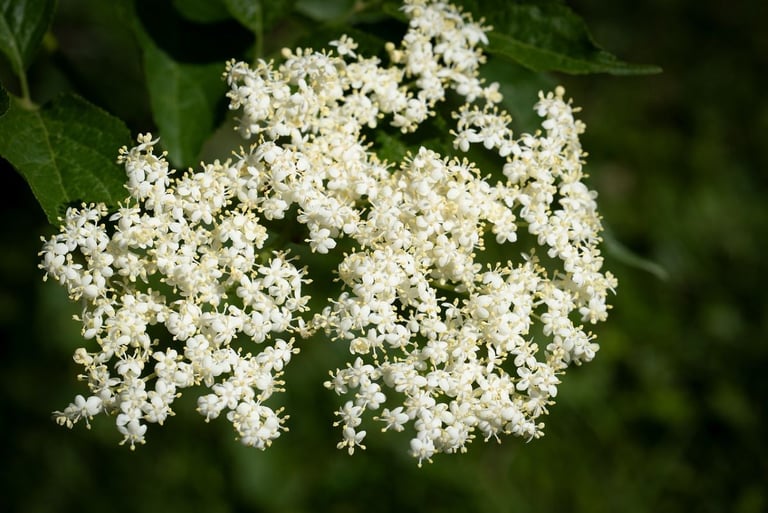
1. Elderflower (Jie Gu Mu Hua)
Elderflower is one of the clearest examples of a shared herbal instinct. In Western herbalism it's a classic diaphoretic, a hot infusion that encourages sweating, opens the pores, and helps the body push out a fever in its early stages. In Chinese medicine, that same action has a name: releasing the exterior. Elderflower disperses wind-heat, helps rashes and early fevers surface, and supports the lungs in clearing congestion.
That overlap isn't a coincidence; sweating out an early-stage fever, rather than suppressing it, is one of the oldest shared strategies in herbal medicine across cultures.
Commonly used for: early colds and flu with heat signs, skin rashes in their early stages, sinus congestion with heat, and any condition where the body needs help pushing a pathogen outward rather than holding onto it.
A note on the name: "Jie Gu Mu" is more precisely associated with Sambucus williamsii, a related elder species used in China primarily for bone and trauma injuries, while European elderflower (Sambucus nigra) is prized for its wind-heat-releasing, diaphoretic action described here. The two species share a genus and overlapping folk uses, but it's worth knowing they aren't identical.
2. Hibiscus (Mei Gui Qie)
Hibiscus is the flower most likely to already be in your pantry, as a tart, ruby-red tea. In Chinese medicine, it's used to clear heat, cool the blood, and support the smooth flow of Liver Qi. Its sour, cooling nature makes it a natural fit for what TCM calls heat accumulation and sluggish circulation, especially around the cardiovascular system.
This is one of the best-researched flowers on this list. Multiple systematic reviews and meta-analyses of randomised controlled trials have found that hibiscus consumption measurably lowers systolic blood pressure, with some pooled results showing reductions in the range of 5–7 mmHg compared to placebo, a meaningful effect for a food-based intervention, and notably stronger in people who start with higher blood pressure.
Commonly used for: high blood pressure, liver heat patterns, a flushed face, irritability, sluggish digestion, and skin conditions linked to blood heat.
Interesting fact: Hibiscus's blood-pressure benefits are so consistently reproduced across studies that it's now one of the most cited food-based interventions in cardiometabolic nutrition research, a direct match for its traditional role clearing Liver heat.


3. Lotus Stamens (Lian Xu)
Every part of the lotus plant has a distinct job in Chinese medicine, the leaf (He Ye), the seed (Lian Zi), the seed's inner heart (Lian Zi Xin), the rhizome node, and the stamen all treat different patterns. The stamens specifically are used to stabilise the Kidney, astringe Jing (essence), and calm the Heart. Their specialty is "leakage", whether that's a physical fluid, an energetic loss, or a mind that won't settle.
Commonly used for: premature ejaculation, excessive sweating, leukorrhea, heart palpitations, insomnia with a restless and unfocused mind, and urinary frequency.
Interesting fact: the fact that TCM assigns five different therapeutic roles to five parts of one plant is a good illustration of how granular this system of classification is; nothing about the lotus is used interchangeably.


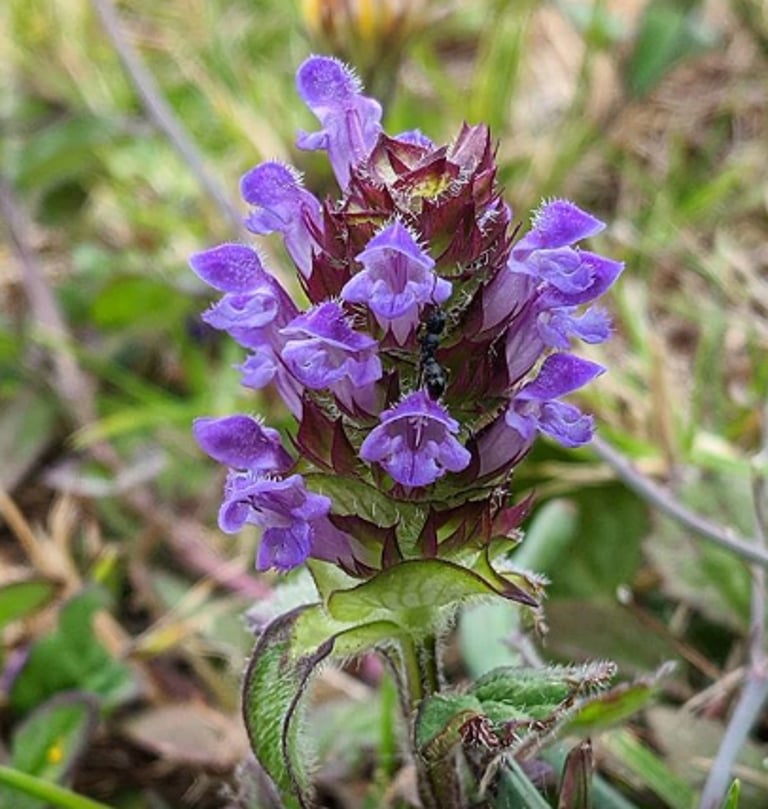
4. Prunella (Xia Ku Cao)
Prunella, also called self-heal, is one of the classic "heat-clearing" herbs in the Chinese pharmacopoeia, specifically for Liver fire that has hardened into a lump. It's the go-to herb when heat accumulating in the Liver channel shows up as swelling, nodules, or painful eyes, and it's used both as an internal decoction and applied topically.
Commonly used for: swollen lymph nodes, thyroid nodules, eye pain and redness from Liver heat, temple headaches, and hypertension patterns linked to Liver Yang rising.
Prunella is also one of the more actively studied TCM herbs in modern oncology and endocrinology research. Multiple meta-analyses of randomised controlled trials, collectively covering well over a thousand patients, have found that Prunella vulgaris preparations, used alongside conventional thyroid medication, improved outcomes for thyroid nodules and hyperthyroidism compared to medication alone, including reduced nodule size and lower relapse rates. Laboratory studies have also identified compounds in Prunella that trigger apoptosis (programmed cell death) in thyroid cancer cell lines. These are early-stage and adjunctive findings, not a replacement for medical treatment, but they line up strikingly well with a use pattern this herb has held in Chinese medicine for centuries.
5. Chrysanthemum (Ju Hua)
Chrysanthemum is one of the most recognizable flowers in Chinese medicine, cooling, clarifying, and specifically drawn to the upper body. It clears wind-heat from the eyes and head and gently anchors rising Liver Yang, the pattern TCM associates with symptoms that flare upward: headaches, dizziness, a flushed feeling.
Commonly used for: headaches, red or dry eyes, blurry vision, dizziness, feverish feelings, and light sensitivity, especially when stress manifests as tension in the head and eyes.
Interesting fact: there are over 20,000 cultivated chrysanthemum varieties, and not all of them are used medicinally or have the same properties; the white-flowered Ju Hua used in TCM formulas is a specific cultivar, not a stand-in for ornamental mums.


6. Campsis Flower (Ling Xiao Hua)
Campsis, or trumpet creeper flower, is a less internationally known herb but a genuinely distinctive one in the Chinese system: it's one of the relatively few flowers classified as a blood mover rather than purely a heat-clearer. It targets blood stagnation combined with heat — a pattern that shows up as skin that's both red/inflamed and stubbornly "stuck."
Commonly used for: rosacea, eczema with heat and itching, menstrual irregularity from blood stagnation, and skin eruptions that are red, inflamed, and persistent.
Interesting fact: because it moves blood, Ling Xiao Hua is used for both dermatological and gynecological conditions, a dual application that's fairly rare among flower-based herbs in TCM, most of which stay in one lane.


7. Chamomile (Mu Ju)
Chamomile might be the most universally recognised "calming tea" flower in the world, and Chinese medicine describes its action in strikingly compatible terms: cooling, gently bitter, and calming to both the digestive and nervous systems. It clears mild Liver heat, supports the Spleen, and specifically soothes the pattern of "Liver overacting on the Stomach", TCM's way of describing digestion that goes sideways under stress.
Commonly used for: bloating and digestive cramping linked to stress, nausea, irritability, mild anxiety, inflamed or irritated skin, and restless sleep with heat signs.
Chamomile is one of the most heavily studied botanicals in the world, and the modern research backs up nearly every part of this traditional description. Its flavonoids, particularly apigenin, have documented anti-inflammatory and mild anxiolytic activity, and clinical trials have shown it reduces intestinal spasm and inflammatory markers relevant to digestive discomfort. It's genuinely one of the tidiest cases of "same plant, East versus West, same result."


8. Valerian (Ji Cao)
Valerian is famous in Western herbalism as one of the strongest sedating herbs available without a prescription, used for insomnia, anxiety, and an overstimulated nervous system. Chinese medicine describes it in its own terms, bitter, warm, with a descending action that brings a rising, restless system back down. That "descending" quality is the TCM way of describing what Western pharmacology attributes to valerian's effect on GABA, the brain's primary calming neurotransmitter: research suggests compounds in valerian slow the breakdown of GABA, allowing more of it to stay active in the nervous system.
Commonly used for: insomnia, anxiety, physical tension and restlessness, heart palpitations, muscle tension and spasms, nervous exhaustion, and stress-related digestive cramping.
Interesting fact: valerian's famously unpleasant smell and its sedative power come from the same source. Isovaleric acid, released as the root's active compounds break down, is responsible for both the odour and much of the calming effect, so a pungent-smelling valerian product is generally a sign of potency, not spoilage.


Key Takeaway:
What's striking about all eight of these flowers isn't just that they work, it's that two medical traditions, developed independently on opposite sides of the world, kept landing on the same plants for the same underlying problems: fevers that need to break, blood pressure that needs to come down, nodules that need to soften, nerves that need to settle. Chinese medicine gave these actions a precise internal logic, releasing the exterior, clearing Liver heat, calming the Shen, while Western herbalism and, more recently, clinical research have been independently mapping the same territory from a different angle.
Neither framework replaces the other, and neither replaces a conversation with a qualified practitioner about your own health. But together, they make a strong case that these flowers earned their reputations the old-fashioned way, by working consistently, for a very long time.
© Copyright 2025 - 2026 Emeqafoods. All rights reserved.