
Natural Remedies for Bloating
Feeling stuffed and tight after a meal, even when you know you haven't overeaten, is a familiar frustration. That uncomfortable, swollen sensation is bloating, and it's one of the most common digestive complaints out there. The good news is that most cases respond well to simple, natural adjustments, no medication required.
TIPSGUT HEALTH

What causes bloating?
Bloating happens when the gastrointestinal tract fills with excess air or gas, leaving the stomach feeling tight, full, or visibly swollen. It's often linked to how food is digested: some foods don't break down completely in the gut, and the fermentation of that undigested matter produces gas. Swallowing air while eating too quickly, constipation, irritable bowel syndrome (IBS), heartburn, and excess salt or carbonated drinks can all contribute as well.
Here are natural, well-supported ways to ease it.
1. Eat Smaller, More Frequent Meals
Large meals ask a lot of the digestive system all at once. Eating smaller portions at regular intervals gives your gut an easier job and reduces the buildup of gas that comes with processing a heavy load of food in one sitting.
2. Fennel Seeds
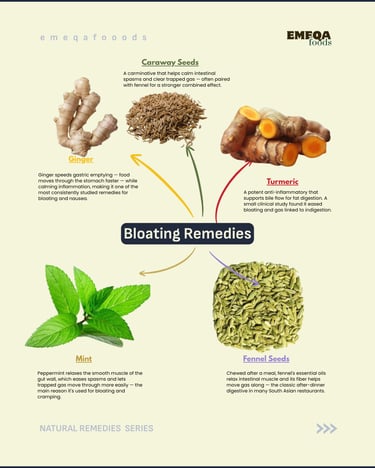
Fennel seeds are one of the most traditional remedies for gas and bloating, and for good reason, they contain compounds that help relax the intestinal muscles and support smoother digestion. Chewing about a teaspoon of fennel seeds after a meal is a simple habit that can make a real difference.
3. Herbal Teas
A cup of the right tea can calm an unsettled gut:
Peppermint tea acts as a natural antispasmodic, easing tension in the digestive tract.
Chamomile tea has a calming effect on both the mind and the gut, which is especially useful when stress is part of the picture.
Ginger tea speeds up how quickly the stomach empties, which helps prevent the fermentation that leads to gas.
Caraway seed tea (steep a teaspoon of caraway seeds in boiling water for about 5 minutes) is a lesser-known but effective option for trapped gas.
4. Cut Back on Salt
Excess sodium makes it harder for the kidneys to process fluid efficiently, which can lead to water retention, a puffy, bloated feeling that's different from gas-related bloating but just as uncomfortable. Easing up on salty and processed foods and leaning toward naturally diuretic foods like cucumber and watermelon, can help the body release retained fluid.
5. Support Your Gut Bacteria
A healthy balance of gut bacteria plays a real role in how much gas your body produces. Probiotic-rich foods, yogurt, kefir, sauerkraut, kimchi, and miso, introduce beneficial bacteria and, in the case of fermented foods, natural digestive enzymes that help break food down more efficiently.
6. Get Enough Fiber
If bloating is tied to constipation, fiber is your friend. It adds bulk to stool and keeps things moving through the digestive tract, which prevents the backup that leads to gas and swelling. Introduce fiber gradually, though, too much too quickly can temporarily make bloating worse.
7. Drink Water Strategically
Water helps flush out excess sodium and supports smoother digestion overall. For the best effect on bloating specifically, try drinking a glass about 30 minutes before meals rather than during or right after, when it can dilute digestive juices.
8. Turmeric
Turmeric's active compound, curcumin, has anti-inflammatory properties that may help calm a bloated, irritated gut. A warm cup of turmeric tea is a gentle way to work it into your routine.
9. Skip the Carbonation
Fizzy drinks introduce extra gas directly into the digestive tract, which has to go somewhere, usually resulting in that trapped, swollen feeling. If bloating is a recurring issue, cutting back on carbonated drinks is one of the easiest changes to make.
10. Move Your Body
Light movement, even just a walk, helps shift gas through the digestive tract and can ease the fluid buildup that contributes to bloating. Some people also find relief from lying down and gently raising their legs for a few minutes, which can help release trapped gas.
Cation:
Occasional bloating is normal and rarely a cause for concern. But if it's frequent, painful, or lasts for extended periods, it may point to an underlying condition like IBS or food intolerance, and it's worth getting a proper diagnosis rather than managing symptoms alone.
Traditional Chinese Medicine meets modern natural science.
© Copyright 2025 - 2026 Emeqafoods. All rights reserved.